Accounts payable
- Area
- Finance
- Level
- Redesigned around AI
- Status
- In production
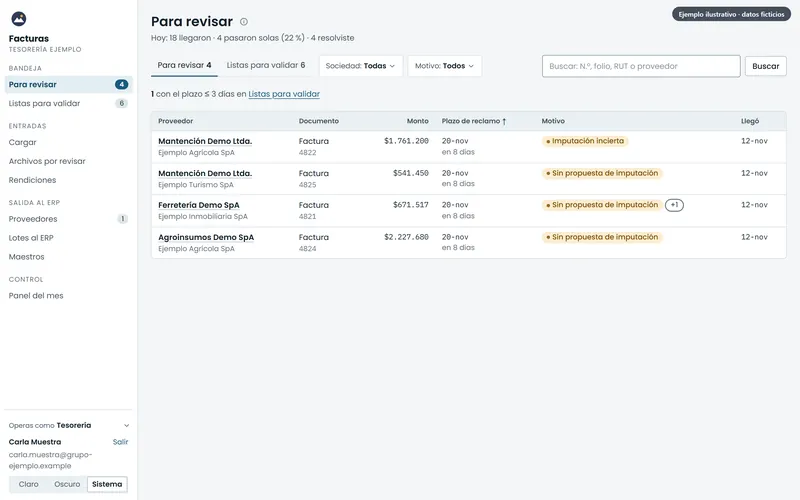
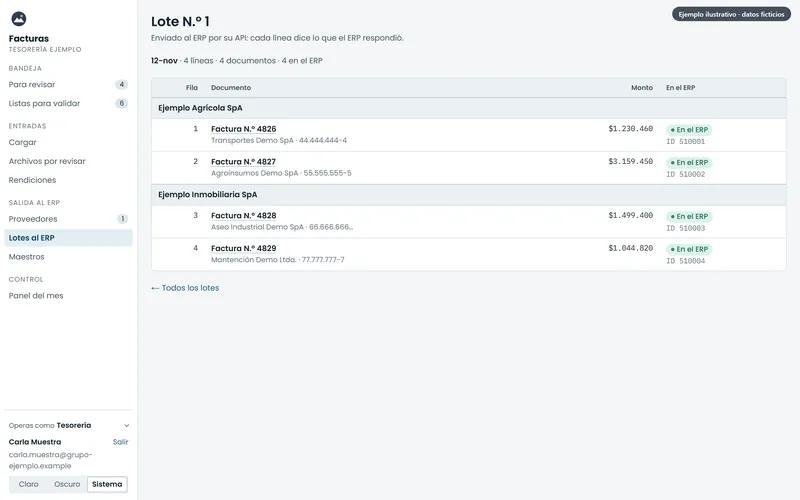
The agent reads each invoice, validates it with the tax authority, proposes the account, emails a question only when something is unclear, and posts it to the ERP.

Cardinal finds the workflow where AI can move your business the most, builds it on your systems and rules, and gets it running.
See redesigned workflows Let's talk
This page is the English summary of cardinal.cl. The rest of the site is in Spanish.
The workflow runs on spreadsheets, emails and people typing.
There are systems and AI in some steps; the workflow is still the old one.
The workflow is rethought as if it were being designed today: agents run it end to end and people decide the exceptions.
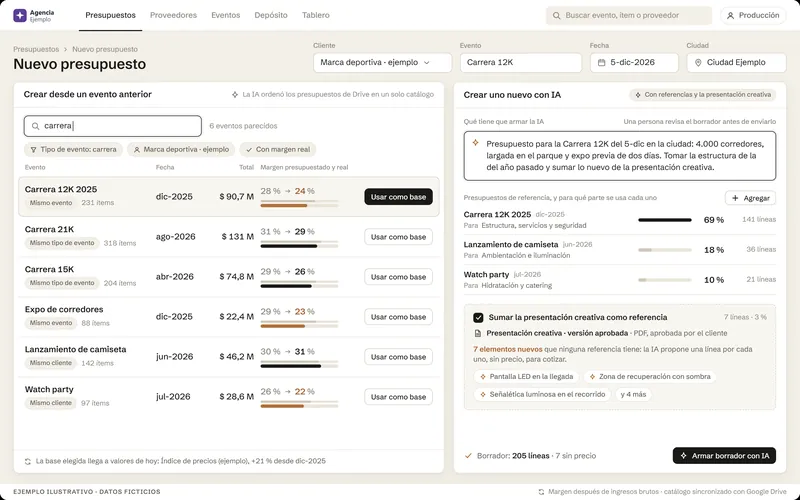
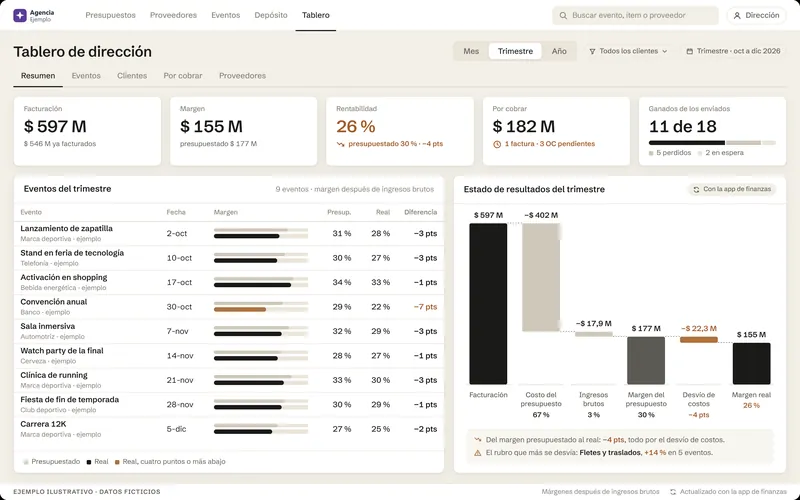
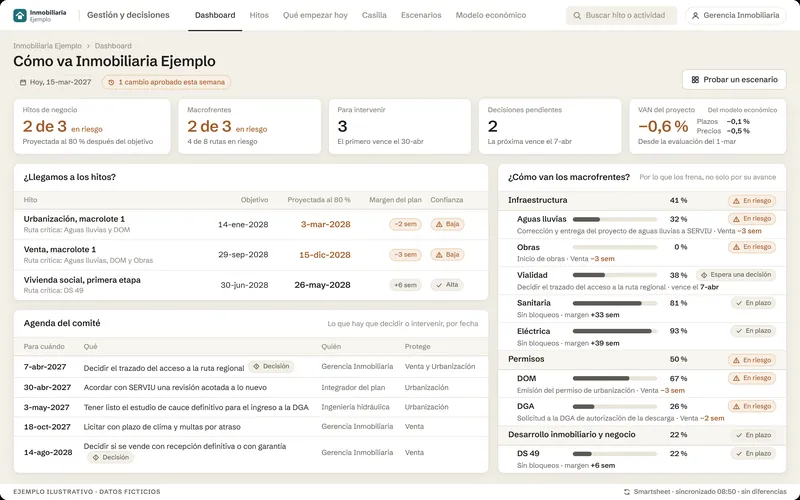
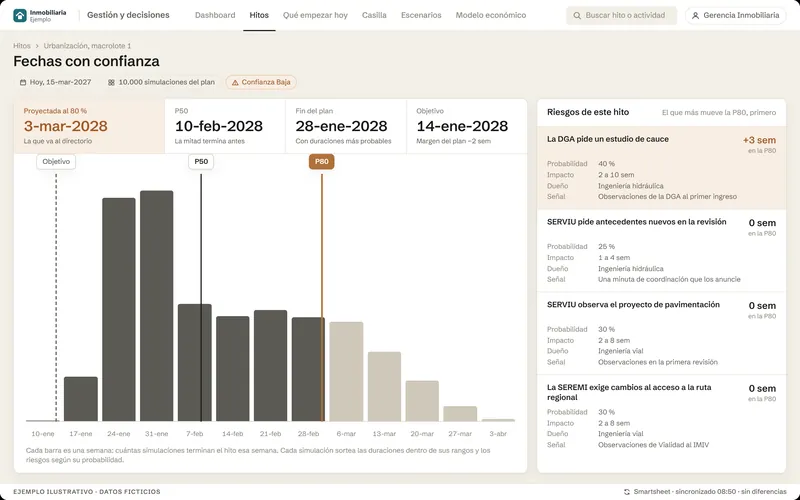
Three examples from three areas, with their screens. The first one is running; the other two are proposals with no client yet. The screens are in Spanish, the language they were built in.
The agent reads each invoice, validates it with the tax authority, proposes the account, emails a question only when something is unclear, and posts it to the ERP.
From budget to event close: AI drafts each budget from past events, every payment is matched to its line, and management sees the real margin.
The master plan recalculates with every change: what to start today, which decision is due, and how confident each milestone date is.
A senior who understands the business and a forward deployed engineer (FDE) who builds, with agents instead of a pyramid. The model grows by adding pairs.

Eduardo Cyterszpiler founded Cardinal. He ran Integration Consulting's Southern Cone offices with full P&L responsibility, led revenue and pricing engagements as Senior Director at Simon-Kucher, and headed Marketing Strategy for the Americas at NTT DATA, with a 100+ consultant team across 8 markets. Global Executive MBA, IESE.
Cardinal invests in the diagnostic and earns its return once the system is running.
No-cost diagnostic*. One workflow, two weeks. It delivers how the workflow runs today (with its starting cost, where that can be measured), the redesign, a first version running on the company's own data, and a priced proposal.
A fixed-price build, close to cost, invoiced against deliverables once they are implemented.
Operation for a monthly fee that follows usage where there is a unit to count (invoices processed, budgets approved) and is fixed where there isn't. With a cap. Unit, fee and cap are agreed before anything is built.
*Subject to eligibility
Cardinal doesn't charge by the hour or for recommendations.
Building with AI is cheap. The expensive part is building something with no impact.